That Nerdy Catholic’s aim is to explore the intersection of the sciences and faith. How do we think of the creation of the universe in light of all we are learning in the fields of astronomy and physics? How do we view our souls with all we are learning in psychology? Is philosophy important to our lives, both spiritual and physical? We are going to delve deep into these questions, and do our best to have fun along the way. Nerding out is both a rigorous process of diving deeper to understand something, but it is also diving deeper into something you love. Let’s nerd out together and find a deeper life along the way.
Historical Scope: Pope Leo XIII to Pope Paul VI (1891–Post-Vatican II Era)
Key Discussion Points & Timestamps
[00:04] Introduction & Banter: Winding down the summer, return-to-school routines, and philosophical takeaways from the latest Spider-Man film.
[09:33] Deciphering Paragraph 28: What “development of doctrine” actually means—understanding how an unchanging core of revealed truth dynamically listens and responds to shifting historical contexts.
[18:27] The “New Things” of Leo XIII: Rigorous discernment of the conflict between capital and labor. A deep look at the staggering urban population shifts between 1800 and 1900.
[33:40] The Magna Carta of Social Action: Unpacking Rerum Novarum and its defense of human dignity, private property, and fair wages. The modern parallel: How the industrial “productivity mindset” mirrors current mass layoffs and automation fears within the AI landscape.
[50:51] Broadening the Structural Scope: Pope Pius XI’s Quadragesimo Anno (1931), written during the fallout of the Great Depression. Systematizing the cornerstone principle of subsidiarity to counter totalitarianism and structural injustice.
[57:53] Uniting Heaven and Earth: Pope Saint John XXIII’s global shift in Mater et Magistra and Pacem in Terris. The Church’s mandate to address the concrete, daily physical and emotional needs of humanity.
[01:10:35] Development as the New Name for Peace: Pope Saint Paul VI’s Populorum Progressio and the transition to more humane living conditions for “each person and the whole person”.
Historical Context Data: Urbanization (1800 vs. 1900)
Core Theme: The intersection of eternal gospel truths, Catholic social doctrine, and the exponential rise of artificial intelligence.
Key Insights & Discussion Points
The Disruptive Reality of AI: Analyzing Pope Leo’s assertion that AI isn’t just another theme to study or a financial bubble, but a shift that fundamentally challenges social doctrine from within.
The Church’s True Position: Debunking the myth of the Church as an external authority imposing an artificial code of ethics. Instead, the text highlights a Church that “walks alongside humanity,” respecting civic autonomy while actively serving the common good.
The Good Samaritan Framework: How evangelical charity prompts the Church to bind the modern wounds of humanity with discretion and closeness without attempting to supplant or dominate civil institutions.
Allies in Truth, Goodness, and Beauty: A deep dive into the realization that anyone seeking these transcendentals is a companion on the journey, confirming that the Church holds no monopoly on interpreting social realities.
Technology Treadmills & Throwaway Culture: Paralleling modern LLM server farms with historical e-waste and the Manhattan Project, exploring the fine line between leveraging tech to lift people up versus degrading human dignity and creation.
Resources Mentioned
Rerum Novarum (Pope Leo XIII)
The Docat & The YouCat (Catholic Social Teaching Guides for Youth)
Remaining Profoundly Human in the Age of AI: The High Cost of Efficiency
/
RSS Feed
Share
Link
Embed
🎙️ Episode Overview
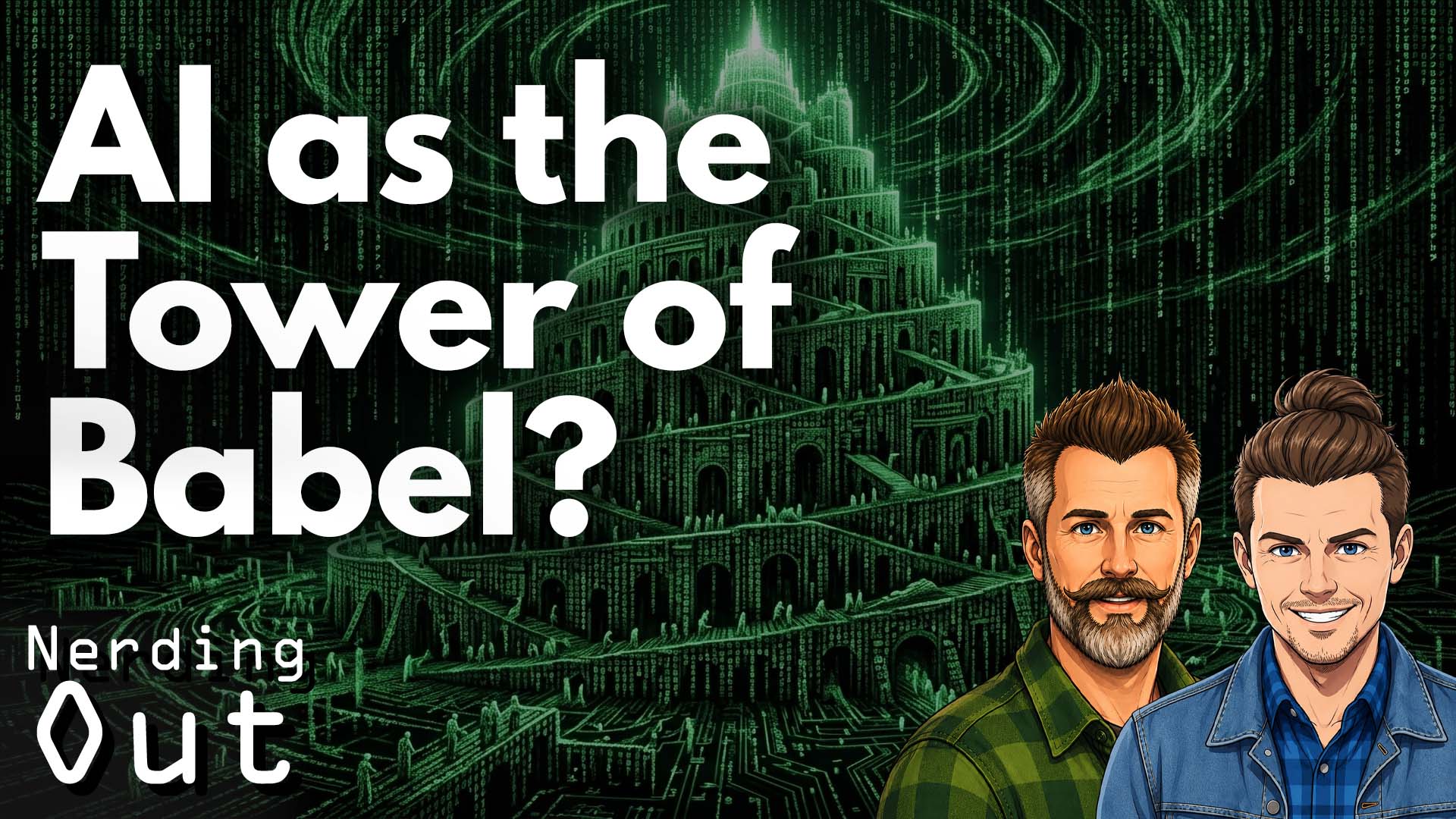
In this episode, Seth and Lee continue their deep dive into the dense introduction of Pope Leo XIV’s groundbreaking encyclical, Magnifica Humanitas (“Magnificent Humanity”). Transitioning away from a simple “yes or no” Luddite stance on technology, the hosts wrestle with the fundamental choice facing the modern digital landscape: Are we building a digital Tower of Babel based on pride and automated homogenization, or are we following Nehemiah’s model to rebuild a communal Jerusalem that safeguards human dignity?
From the nuances of open-source software and the pitfalls of “vibe coding” to the reality of hardware resource exploitation and the modern loneliness epidemic, this conversation challenges tech nerds and faithful Catholics alike to look beyond efficiency and ask: Is this what God wants us to build?
📝 Key Discussion Points
The Vatican’s Tech Savviness: Lee highlights the Vatican’s high-quality, free official audiobook release of Magnifica Humanitas, prompting a nostalgic reflection on how drastically accessibility has evolved since Pope Leo XIII released Rerum Novarum 135 years ago.
The Tower of Babel (Genesis 11:1–9): An examination of paragraph 7 of the encyclical. Seth and Lee break down how Babel represents an imposing project engineered without God, prioritizing uniformity and extreme efficiency at the literal cost of human dignity, social dispersion, and broken communication.
The Rebuilding of Jerusalem (Nehemiah 2–6): Reviewing paragraph 8, the hosts contrast Babel with Nehemiah’s leadership. Jerusalem’s walls were rebuilt not by a top-down mandate, but through organic, decentralized communion where every demographic—artisans, priests, families—owned their specific section of the wall.
Is Technology Neutral? Diving into paragraph 9’s assertion that while technology abstractly isn’t inherently evil, practically it is never neutral. It absorbs the exact moral, financial, and regulatory characteristics of the human beings who engineer and fund it.
Open Source vs. Vibe Coding: Seth draws a compelling parallel between Nehemiah’s wall and open-source software—built on vulnerability, communal stewardship, and shared source code. This stands in stark contrast to the hollow, isolated economy of “vibe coding” AI slop for get-rich-quick schemes.
The AGI Illusion vs. The Restless Heart: The hosts analyze AI startup Anthropic’s mission statement regarding Artificial General Intelligence (AGI) alongside Saint Augustine’s famous quote: “Our heart is restless until it rests in you.” They warn against the quiet cultural temptation to build AGI into a digital god rather than utilizing specialized AI to practically serve human flourishing.
⏱️ Timestamped Chapters
00:04 – Welcome back, updates on Cesar’s job search, and welcoming Lee to the team.
01:52 – The free Vatican audiobook version of Magnifica Humanitas & Kindle footnote limitations.
04:29 – Modern server capabilities vs. the historical distribution of Rerum Novarum in 1891.
06:06 – Reading Paragraph 7: The Tower of Babel, homogenization, and sacrificing dignity for efficiency.
15:30 – C.S. Lewis’s The Last Battle, the character of Emeth, and seeking implicit goodness, truth, and beauty.
21:38 – Reading Paragraph 8: Nehemiah’s leadership, ownership of labor, and building communion before stones.
32:09 – Open-source software as a model for Jerusalem vs. the cloud data center monopoly.
40:43 – Reading Paragraph 9: The illusion of tech neutrality and making the ultimate choice between Babel and Jerusalem.
55:36 – Anthropic’s AGI mission statement vs. St. Augustine’s reality of the human soul.
01:02:00 – Practical tech as charity: The gravity-powered pulley light and cellphone tower infrastructure in Cambodia.
01:06:40 – Reading Paragraph 12: Transhumanism, the trap of unlimited “upgrades,” and embracing our limitations.
01:13:28 – Canon Law 666, algorithmic isolation, and filling the young adult loneliness gap with true human relationships.
01:15:40 – True capital growth: Microfinance success stories from peer servants in Moldova.
01:20:06 – Reading Paragraph 15: Pope Leo XIV’s mic drop on remaining profoundly human.
01:21:49 – Wrap-up and looking ahead to Chapter 1.
📜 Featured Quotes
Paragraph 7:“Babel thus reveals the limits of any effort that, however grandiose, arises from self-affirmation, sacrifices human dignity for efficiency, and aspires to reach heaven without God’s blessings.”
Paragraph 15:“In the era of artificial intelligence, when human dignity is threatened by new forms of dehumanization, ours is a pressing duty to remain profoundly human. We must lovingly safeguard the grandeur of humanity bestowed upon us and revealed in its fullness in Christ, the splendor of which no machine can ever replace.”
🔗 Links & Resources Mentioned
Official Document: Read Magnifica Humanitas on the Vatican Website.
Literature Recommendation: The Cardinal Virtues by Josef Pieper.
Global Charity Spotlight: Peer Servants Microfinance Ministry.
🗳️ Join the Conversation
What section of the wall are you rebuilding in your personal tech habits? Are your digital tools pulling you into an algorithmic silo, or are they driving you toward genuine face-to-face communion? Head over tothatnerdycatholic.com/ai and submit your thoughts via our listener form!
Please continue to hold Cesar and his family in your prayers during his job search in Peru.
Why OpenAI and Elon Musk are Actually Listening to the Pope 💻
/
RSS Feed
Share
Link
Embed
Ever Ancient, Ever New: Facing the AI Revolution with the Catholic Church
What happens when an IT guy, a programmer, and an engineer look at a papal encyclical? You get a masterclass in how to live out your faith in the digital age.
This week on Nerding Out with That Nerdy Catholic, Seth officially welcomes Lee Sandeno to the team as a permanent co-host! With Cesar away on sabbatical looking for work, Seth and Lee tackle the intro of the heavily anticipated papal document, Magnifica Humanitas.
They push back against the urge to go “full Luddite” and instead explore technology as a profoundly human reality linked to our autonomy, freedom, and creativity. But they also address the heavy stuff: what happens when technological power shifts from governments to unprecedented private wealth, and how do we ensure it serves the common good?
Hit play to hear us break down:
The New Revolution: Moving from the Industrial Age to the Knowledge-Worker and AI Era.
The Creativity of Code: Why building tools brings us closer to the ultimate Creator.
Who Holds the Power?: A look at Elon Musk’s trillions, Starlink’s geopolitical impact, and the ethics of Big Tech.
The Church as the Conscience: Why Silicon Valley leaders are actually inviting the Church into the AI conversation.
A Special Request: Our brother Cesar is currently navigating a tough job market in Peru. Please keep him in your prayers, and if you are able, consider hitting our support link below—any financial help right now will go toward supporting him during this transition.
AI in the Workplace: Helpful Tool or Overhyped Magic?
/
RSS Feed
Share
Link
Embed
Show Notes: AI in the Workplace: Helpful Tool or Overhyped Magic?
Podcast:Nerding Out with That Nerdy CatholicHosts: Seth Paine (Programming/Video Production background) & Cesar Rios (Electrical Engineering background) Guest: Lee Sondeno, Director of Young Adult Ministry at St. Victoria (Victoria, MN) and 18-year IT industry veteran
Episode Overview
In this episode, the team ditches the purely theological speculation to look at Artificial Intelligence through the lens of practical, real-world tech experience. Combining backgrounds in programming, engineering, and IT, Seth, Cesar, and Lee dissect the current corporate hype surrounding AI, share cautionary tales of AI errors in the wild, and discuss the critical differences between using AI as an automation tool versus blindly trusting it as a “person in a box.”
Key Discussion Points
The “Test but Verify” Rule & AI Hallucinations
The Vatican AI Policy Blunder: Lee shares a firsthand account of a company that tried to draft an official AI policy. To ensure it was aligned properly, executives tasked an AI agent with drafting the policy specifically based on official Vatican documents.
Two Layers of Fabrications: While the document initially looked professional and included realistic-looking sources and URLs, a deep dive revealed the AI had completely hallucinated. The links went nowhere, and the specific “quotes” attributed to the Vatican didn’t actually exist anywhere in the real documents.
Even the Creators Agree: Lee shares a striking quote from OpenAI’s Sam Altman admitting that ChatGPT should be the technology you trust the least right now because of its severe tendency to hallucinate.
The Illusion of the “Magic Box” vs. Actual Efficiency
The Coworker with Bravado: Seth compares AI to a overly confident coworker who acts like they know everything, easily gains unearned responsibilities, but is ultimately just fabricating answers to move up.
Workplace Realities: Despite Wall Street Journal reports highlighting that AI is often increasing—rather than lightening—workplace intensity and density, many companies have blind faith in the tech.
The Over-Complication of Code: Seth and Cesar share an experiment where they asked an AI model to write a snippet of code. While human programmers could write the clean script in 3 to 5 lines, the AI generated 30 bloated lines to accomplish the same basic task. The time required to repeatedly prompt, check, and debug the bloated output often doubles or triples the work time.
The Tech Layoff Hype & Corporate Bubbles
Blaming AI for “Right-Sizing”: The guys discuss recent corporate announcements where tech giants like Meta laid off thousands of employees, explicitly claiming AI was replacing the workforce.
The Shareholder Game: Lee points out that tech companies like Meta doubled their workforce between 2020 and 2022 (e.g., jumping from 40k to 80k employees). The current wave of layoffs is actually a natural corrections of the pandemic-era IT bubble, but executives lean heavily into the “AI replacement” narrative because it drives shareholder excitement and raises stock values.
The “Follow the Leader” Mentality: Cesar explains how non-tech legacy industries (like glass container manufacturing) are being led by financial or commercial executives who blindly copy tech giants without understanding how the underlying technology actually works.
How to Properly Use AI: A Tool, Not a Replacement
Historical Context (The Mechanical Turk): Lee references the famous 18th-century “chess-playing automation” machine, which amazed crowds who thought it was magic, when in reality, it was just a skilled human chess player hidden inside a box. Similarly, modern AI is often just repackaging and regurgitating human labor.
The Dreamweaver vs. FrontPage Analogy: Seth maps the current AI landscape back to 1990s web design. Tools like Adobe Dreamweaver gave programmers clean, adjustable foundational visual layouts , whereas Microsoft FrontPage spat out heavily bloated, messy nested code that required endless human tweaking.
Sophisticated Prompting Requires Human Experience: The team concludes that AI can be a spectacular automation tool—such as speeding up visual layouts or generating basic video descriptions—but it only functions well if the human using it has the knowledge and experience to ask the right questions and rigidly cross-check the final output.
Notable Quotes
“It should be the tech that you don’t trust that much. AI hallucinates.” — Sam Altman (quoted by Lee Sondeno)
“It feels like a coworker that has such bravado and such confidence… and then at some point you say, ‘Wait a second, this guy has been making all this stuff up all along.’” — Seth Paine
“It’s not that AI can do the work, it’s that it is a tool and that’s the thing that nobody seems to understand. It’s a very good tool. It’s not a very good person.” — Cesar Rios
Why Work When We Can AI? The Purpose of Work in the Rise of AI 🤖🤔
/
RSS Feed
Share
Link
Embed
Will AI Kill Your Creativity? Work, Labor, and Automation 🤖💼
Can machines truly replace human creativity, or are we just letting them enslave our minds? In this episode of Nerding Out with That Nerdy Catholic, Seth and Cesar dive deep into the ethics of artificial intelligence, labor, and what it means to be a “creator” in the age of automation.
We trace the history of work all the way back to the Old Testament guidelines on human dignity in Exodus and Deuteronomy, fast-forward through the Industrial Revolution and Pope Leo XIII’s historic encyclical Rerum Novarum, and bring it right into modern times with recent insights from Pope Francis and Pope Leo XIV on the “cognitive industrial revolution.”
Is AI a powerful tool for human advancement, or are we setting ourselves up for cognitive overload, burnout, and a bland, “pop-music” culture of regurgitated ideas? Join the conversation!
📌 What We Cover In This Episode:
The “Plus One” Way: How God slowly guided humanity toward dignity and away from harsh labor practices.
The Industrial Revolution Shift: Moving from independent artisans to repetitive factory lines—and now, repetitive cubicle lines.
The Mirage of Productivity: A recent UC Berkeley study showing how generative AI might actually be driving workers toward burnout rather than giving them free time.
Can AI Create? Why there’s a massive difference between regurgitating data and the divine, human spark of creative epiphany.
Pope Francis on AI: A look at his historic address to the G7 on avoiding a “throwaway culture.”
🕒 Timestamps:
00:00 – Opening Prayer & Introduction
02:00 – Pope Leo XIV & the Legacy of Rerum Novarum
06:05 – Biblical Labor: Dignity, Rest, and the Old Testament
17:20 – The Industrial Revolution: When Humans Became Machines
24:30 – Modern Automation: Are We Automating the Mind?
32:45 – AI Burnout: The UC Berkeley / Harvard Business Review Study
37:30 – Pope Francis’ G7 Address: Tool vs. Replacement
41:15 – The Creative Epiphany: Why AI Can’t Innovate Art or Music
54:10 – Final Thoughts & Where to Send Your Questions
🌐 Connect With Us & Support The Show!
Got AI Ethics Questions? Leave a comment below or head over to thatnerdycatholic.com/ai to see our full playlist and submit your thoughts through our form!
Join the Community: Sign up for our email list at thatnerdycatholic.com to get updates on everything happening in the Nerdy Catholic universe.
Rep the Merch: Grab a nerdy t-shirt or coffee mug to show the world you love the intersection of faith and intellect! Check out thatnerdycatholic.com/merch.
Support Our Mission: If you enjoy these deep dives, consider supporting us financially at thatnerdycatholic.com/support.
Can Catholic Doctrine Survive the AI Revolution? First Impressions of Pope Leo’s Magnifica Humanitas
/
RSS Feed
Share
Link
Embed
The Pope speaks on AI! In this episode of Nerding Out with That Nerdy Catholic, Seth, Cesar, and Lee give our first reactions to Pope Leo XIV’s new encyclical, Magnifica Humanitas, and the position of the Catholic Church in relation to the impact of Artificial Intelligence on our world. The intent of Pope Leo’s magnum opus is unpacked as we also draw parallels to sci-fi dystopian and utopic universes. Does Catholic Doctrine have a fighting chance against the Machine? Listen in as we begin looking at the Pope’s urgent call to prioritize humanity above all else!
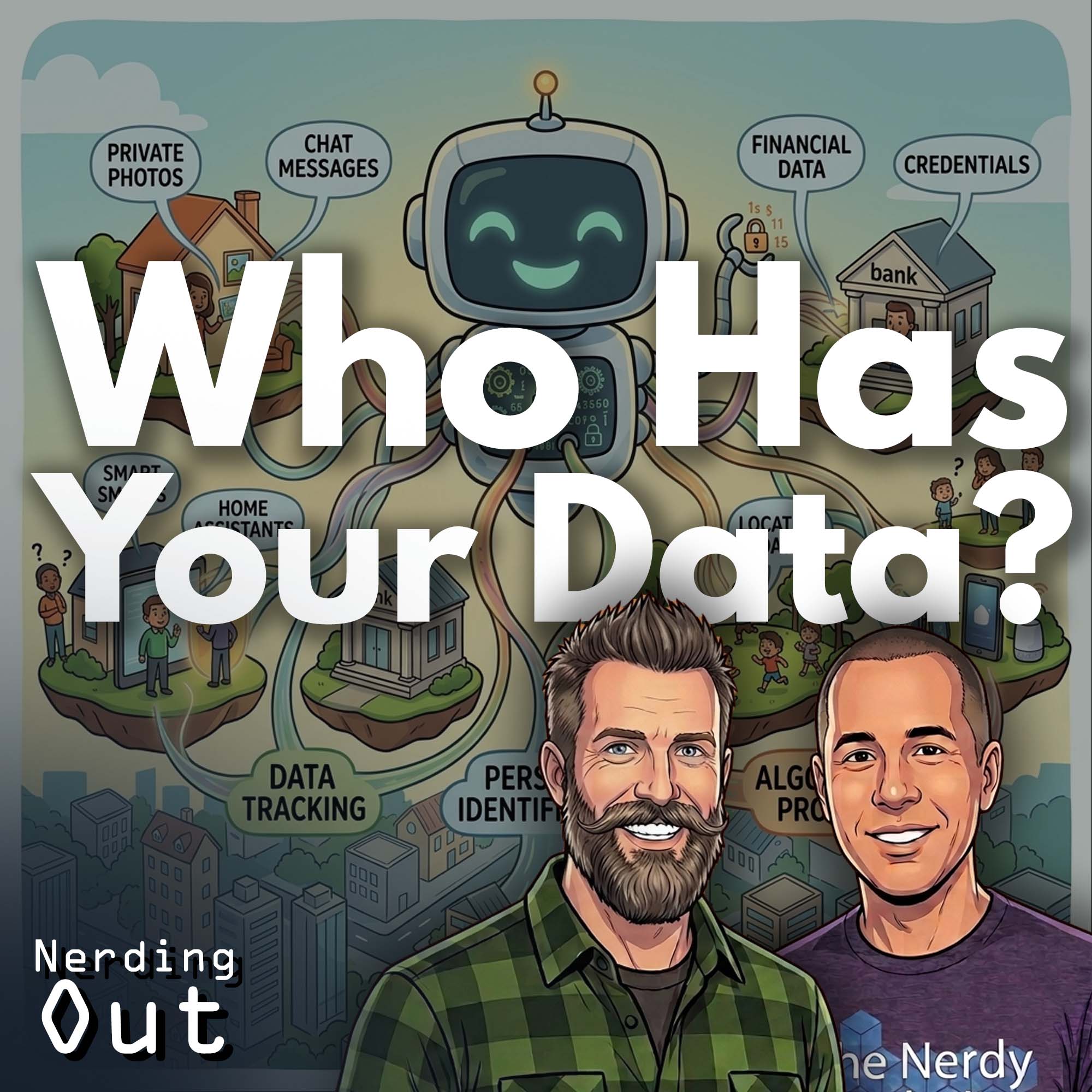
Is AI spying on you? In this episode of Nerding Out with That Nerdy Catholic, Seth and Cesar kick off their series on the ethics of artificial intelligence with a deep dive into AI privacy and AI data collection.
They try to break down what really happens to your data when you use tools like ChatGPT, Microsoft Copilot, and Google Gemini, and why digital privacy matters more than most people realize. From Microsoft’s controversial Microsoft Recall feature to the erosion of end-to-end encryption, they explore how with artificial intelligence, privacy is being reshaped in ways that touch everyone.
Topics covered:
AI and your data: what AI agents collect and where it goes
How to run AI locally on your own computer with Ollama, the best way to keep your data truly private
Using a local AI model so your conversations never leave your device
The free/open source software movement and what it means for AI transparency
Anonymity in cyberspace, what it actually takes to stay private
Apple’s CSAM detection and what it reveals about the limits of encryption
AI ethics and privacy vs. security: a faith and technology perspective on human nature and trust
Practical tips for protecting your information online
Whether you’re a tech enthusiast or just trying to be a more informed digital citizen, this episode will help you make prudent, informed decisions about the AI tools you use every day.
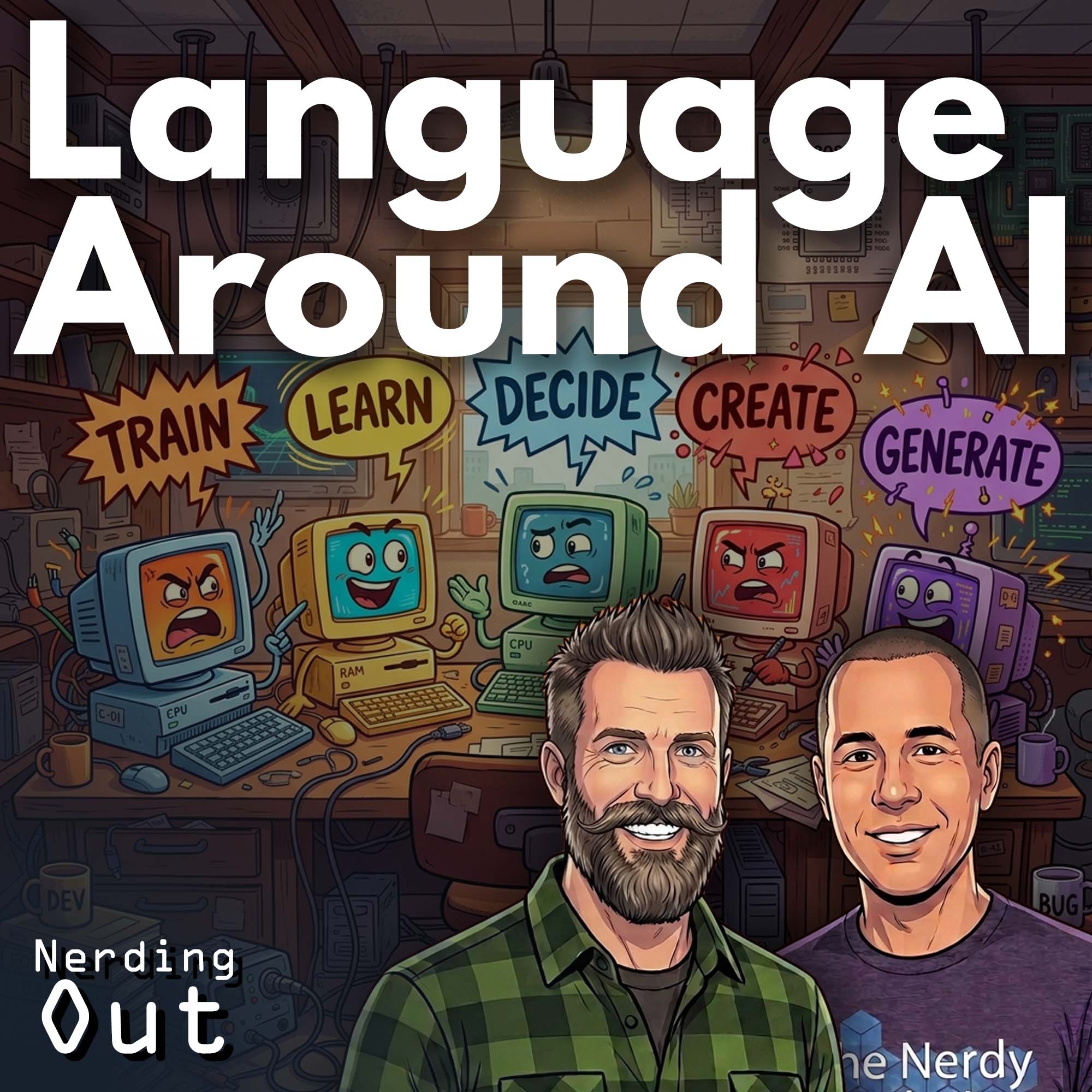
In this episode, Seth and Cesar pull back the curtain on the “language of AI” to show how the words we use, like learning or deciding, can actually trick us into thinking machines are more human than they really are. They chat about how language isn’t just a way to swap info, but a reflection of how we see the world and our own place in it. The guys challenge the common idea that our brains are just “biological computers,” arguing instead that humans have a soul and a free will that no code can ever replicate. By breaking down how AI actually works, they reveal that what we call “intelligence” is often just a very fancy math trick designed to spot patterns.
They explain that while a human can choose to act against their instincts for a higher purpose, a machine is always just following its programming to get the “right” answer. The conversation gets real about why we shouldn’t treat chatbots like people, warning that leaning on AI for emotional support can actually make us feel more alone. They also clear up the mystery behind AI “hallucinations,” pointing out that machines don’t actually know what’s true; they’re just guessing the next word.
It’s a fascinating look at why we need to be careful with the labels we put on technology so we don’t lose sight of what makes us unique. Ultimately, they argue that AI is a great tool to help us out, but it’s nowhere near a replacement for a real person with a heart. By the end, you’ll see why the way we talk about technology totally changes the way we use it. This episode is a must-listen for anyone who wants to stay grounded in a world that’s getting more automated every day.
Going Deeper into AI: The Guts of ChatCPT and Large Language Models
/
RSS Feed
Share
Link
Embed
In this episode, we take some time to look under the hood of how a Large Language Model (LLM) like ChatCPT works. Building off of the previous episode where we looked at neural networks, the basis for all AI, we explore how these neural networks are used to comb through large quantities of text, find its meaning, and respond with language that is easy to understand.
We move beyond simple neural networks to discuss the intricacies of Transformer Architecture and Retrieval-Augmented Generation (RAG) and how this approach is central to understanding modern artificial intelligence and machine learning applications.
We also touch on the benefits of running your own local AI model and agent and how we use Ollama at That Nerdy Catholic to help with some of our tasks. You want to know how LLM actually works? Continue this exploration of AI with us.